
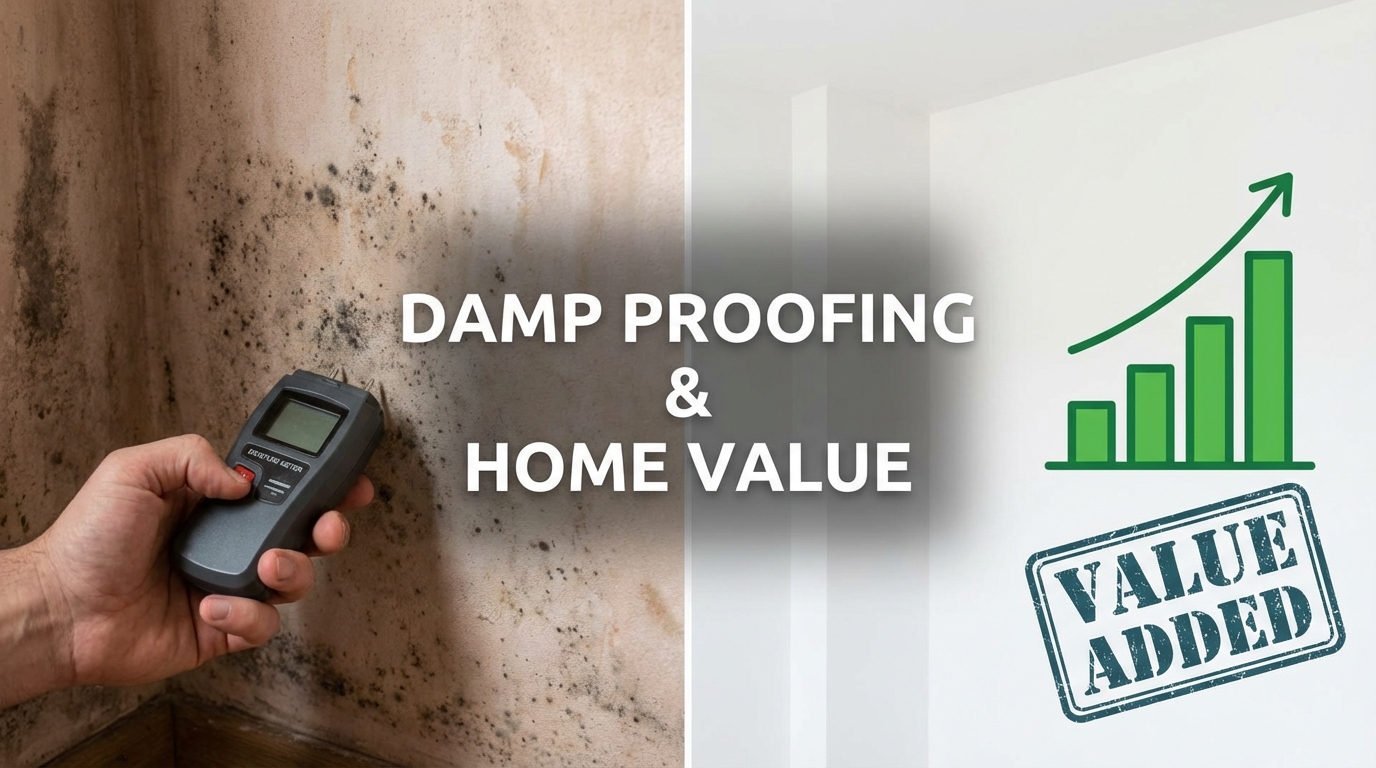
If you have noticed signs of damp in your home, you may already be wondering what it could mean for your property's worth. Whether you are preparing to sell, recovering from a difficult survey result, or simply trying to protect the investment you have made in your home, one question tends to surface quickly: does damp proofing add value to your home? The short answer is yes, but the full picture is a little more nuanced than that. In this article, we explore how untreated damp affects property values, what the remediation process looks like, and why addressing moisture issues thoroughly and professionally is one of the most impactful things you can do for your home.
How Damp Affects Your Property's Value
Damp is one of the most common and most damaging issues found in UK homes. When left untreated, it does far more than leave unsightly stains on walls. It eats into structural materials, creates conditions that encourage timber decay, and produces the kind of survey findings that make buyers nervous and lenders cautious.
According to industry experts cited by The Intermediary, untreated damp and mould can reduce a property's value by as much as 20% in the current cautious UK housing market. On a property valued at £300,000, that represents a potential loss of £60,000. Even at the more conservative end of the scale, a devaluation of five to ten per cent is a significant financial hit that few homeowners would be comfortable absorbing.
Beyond the numbers, untreated damp also impacts a property's saleability. Buyers who spot damp, or who receive a survey flagging moisture problems, will either walk away entirely or use the findings to negotiate a considerably lower offer. In either case, the seller is in a weaker position.
Renegotiating After a Homebuyers Survey
If you are selling your home, a homebuyers survey that flags damp can feel like a serious setback. According to Reallymoving, buyers can reasonably request reductions of between five and ten per cent of the agreed price when a survey identifies structural or damp-related issues. In some cases, depending on the severity of the findings, negotiations can result in considerably larger reductions.
For sellers, the most effective way to retain control of these conversations is to address the damp before the property goes to market. A professionally treated property, supported by documented remediation work and a long-term guarantee, puts you in a far stronger negotiating position. Buyers are reassured, lenders are satisfied, and you can stand behind the condition of your home with confidence.
Even if damp is discovered during an active sale, having a reputable specialist carry out a thorough inspection and treatment quickly can be enough to keep the transaction moving. The important thing is that the work is done properly, with appropriate documentation to back it up.
Understanding the Different Types of Damp
Not all damp is the same, and the treatment required will depend entirely on the type of moisture problem present in your property. Broadly speaking, there are three main categories that we encounter in homes across Bournemouth and Dorset.
Rising damp occurs when groundwater travels upwards through the walls of a property via capillary action. It typically appears as a tide mark on lower sections of walls and can cause significant damage to plaster, skirting boards, and structural materials over time. You can read more about rising damp and how it is treated on our website.
Penetrating damp enters a property horizontally through external walls, roofs, windows, or around pipework. It is often associated with structural defects such as cracked render, faulty guttering, or deteriorating pointing, and can be particularly damaging if it reaches timber elements within the building.
Condensation is the most common form of damp in UK homes and is caused by warm, moist air coming into contact with cooler surfaces. While it may seem less serious than rising or penetrating damp, persistent condensation can lead to mould growth and long-term damage to walls, ceilings, and furnishings. Poor sub-floor ventilation can also contribute to hidden moisture problems beneath ground floors. If you have concerns about airflow under your home, our sub-floor ventilation solutions may be worth exploring.
The RICS consumer guide on damp and mould provides a useful overview of how damp is identified and managed in residential properties, and is worth reading if you want to understand the broader context of moisture issues in UK housing.
The Real Cost of Damp Remediation
One of the reasons homeowners sometimes delay treating damp is uncertainty about cost. Without a proper diagnosis, it can be difficult to know whether you are looking at a straightforward localised fix or something more involved. This uncertainty is also why some buyers, when presented with survey findings, instinctively seek large price reductions as a cushion against unknown remediation costs.
The reality is that professional damp treatment, when carried out promptly and correctly, is rarely as expensive as worst-case estimates suggest. The cost will vary depending on the type of damp, the extent of the affected area, and whether any associated structural damage needs to be addressed. Issues such as wet rot or dry rot in timber can add complexity, particularly if they have been left untreated for some time.
What matters most from a value perspective is not just the remediation itself, but the quality and documentation of the work carried out. A treatment backed by a long-term guarantee is worth significantly more to a future buyer or mortgage lender than one without any supporting paperwork.
It is also worth noting the impact damp can have on the health of those living in the property. Government guidance makes clear that even without visible mould, dampness alone can increase the risk of health problems. Addressing damp is therefore not just a financial consideration, it is a responsibility to everyone in the home.
Does Fixing Damp Add Value to Your Home?
Yes, treating damp professionally does add value to your home, and it does so in several meaningful ways.
First, it removes one of the most common and most damaging red flags that puts buyers off and depresses valuations. A property that has been treated and certified as free from active damp is simply easier to sell and commands a stronger price.
Second, it prevents further deterioration. Damp that is left untreated rarely stays the same. It tends to spread, causing progressively greater damage to plaster, masonry, insulation, and timber. Addressing it early limits the scope of the problem and protects the structural integrity of your home over the long term.
Third, it provides documented evidence of responsible property maintenance. When it comes to sale time, being able to present a surveyor's report, a detailed schedule of works, and a transferable guarantee is a genuine asset. It gives buyers confidence and removes the uncertainty that so often leads to aggressive price negotiations.
Why a Thorough Survey is the Essential Starting Point
One of the most important things we can tell you is that the value of damp proofing is directly linked to the quality of the diagnosis that precedes it. Generic treatments applied without a proper assessment of the underlying cause will rarely deliver lasting results, and in some cases can mask problems rather than resolve them.
This is why we always begin with a comprehensive survey before any work is recommended or carried out. Every property is different. The materials it is built from, its age, its orientation, and its local environment all influence the type of damp present and the most effective way to treat it. A tailored solution, based on a thorough inspection, is what delivers genuine and lasting results.
Our Four-Step Process
At Bio-Kil, we follow a clear and structured approach to every project, ensuring you have full confidence in the work being carried out.
1. Book a Survey
The first step is always a survey. This gives us the opportunity to visit your property, understand the full picture, and identify the precise nature and source of any damp issues present.
2. Detailed Inspection
Our specialist will carry out a thorough inspection of the affected areas, assessing the extent of the problem and identifying any contributing factors such as structural defects, timber issues, or ventilation problems.
3. Clear Report and Quote
Following the inspection, you will receive a clear, jargon-free report explaining what we have found and what we recommend. Alongside this, you will receive a transparent quote so you know exactly what to expect before any work begins.
4. Treatment and Protection
Once you are happy to proceed, our team will carry out the agreed remediation work to a high standard, leaving your property clean, tidy, and properly protected.
You can get in touch with us here to book your expert survey today.
The Bio-Kil 20-Year Guarantee
One of the things that sets us apart is the confidence we place in our own work. Every treatment we carry out is backed by our 20-year guarantee, giving you long-term peace of mind and providing the kind of documented assurance that makes a genuine difference at the point of sale. Whether you are staying in your home for the foreseeable future or planning to sell in the coming years, this guarantee is a tangible indicator of quality that buyers, solicitors, and lenders all recognise.
What Our Customers Say
The reassurance we offer is reflected in the experiences our customers share with us. One returning client described us as a "very professional company," adding: "I have used Bio-Kil many times for the problems in my rented properties especially with damp. They always offer a professional approach and leave the property as they found it with the problem solved."
Another customer summarised their experience as "fantastic service from start to finish," saying: "Thanks to Brooke and the team for an excellent job solving my damp problem. From start to finish they were friendly and professional. I would highly recommend Bio-Kil."
A third homeowner told us we had "exceeded expectations," noting that the team were "quick, professional, friendly and accommodating," and that the standard of workmanship throughout was very impressive.
These are the kinds of outcomes we aim to deliver on every single job, because we understand that when it comes to your home, only the best will do.
Take the First Step Towards a More Valuable, Protected Home
Damp proofing, when carried out correctly by qualified specialists, is one of the most effective investments you can make in your property. It protects its structure, supports its long-term value, and gives you the peace of mind that comes from knowing your home is properly looked after.
If you are concerned about damp in your Bournemouth or Dorset property, or if you simply want to get ahead of potential issues before they become more serious, we are here to help. Contact Bio-Kil today to book your survey and take the first step towards a healthier, more valuable home.