
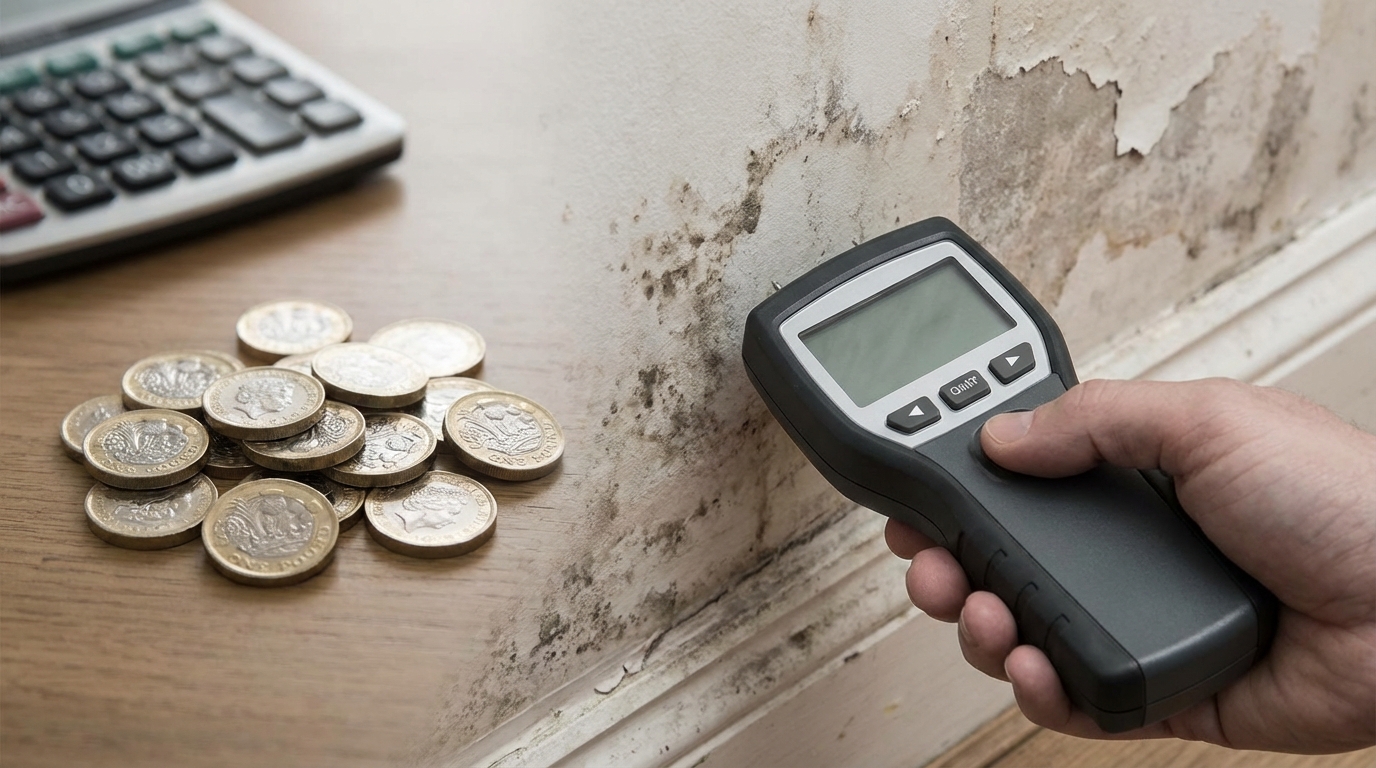
If you've noticed damp patches spreading across your walls, a persistent musty smell, or wallpaper beginning to bubble and peel, you're dealing with a problem that affects thousands of UK properties every year. For homeowners and landlords in Bournemouth, Dorset, and across the South of England, acting quickly is essential. Damp left untreated can cause progressive structural damage, encourage harmful mould growth, and significantly reduce the value of your property.
One of the first things people want to know is: how much does damp proofing cost in the UK? The honest answer is that it varies. The type of damp, the extent of the problem, the size of your property, and the treatment method required all influence the final price. In this guide, we walk you through the key cost factors and explain what you can expect when you work with a professional damp proofing specialist like Bio-Kil.
The Types of Damp That Affect UK Homes
Understanding which type of damp you're dealing with is the starting point for any effective treatment. Different forms of damp require very different approaches, and an accurate diagnosis is essential to avoiding costly mistakes.
Rising damp occurs when groundwater travels upward through the walls of a building via capillary action. It is most common in older properties and is typically identified by a characteristic tide mark or salt staining low on internal walls. A failed or absent damp proof course (DPC) is usually the cause.
Penetrating damp enters the building through the external fabric, such as cracked masonry, defective pointing, damaged guttering, or faulty window seals. Unlike rising damp, it can appear at any height on a wall or ceiling, and the source is often some distance from where the internal symptoms appear.
Condensation is the most widespread form of damp in UK homes and results from warm, moisture-laden air meeting cold surfaces. Poor ventilation is almost always a contributing factor. Left unaddressed, condensation leads to persistent mould growth and can affect the air quality throughout your home. You can find out more about how we tackle this on our condensation treatment page.
The UK Government's guidance on damp and mould is clear on the serious health risks that untreated damp can pose, including respiratory problems and the aggravation of conditions such as asthma and allergies. Addressing damp promptly is not just about protecting your property; it's about protecting the people inside it.
How Much Does Damp Proofing Cost in the UK?
The following cost ranges reflect typical industry benchmarks and are intended to give you a general indication of what to expect. Your actual quote will depend on a thorough inspection of your property, the type of damp identified, and the scope of work required.
Professional damp survey: A specialist damp survey typically costs between £150 and £300. This is an important and worthwhile investment. A proper diagnostic survey ensures that the treatment recommended is the right one for your specific problem, rather than a generic fix that may not address the root cause.
Chemical injection damp proof course: For rising damp, a chemical injection DPC is one of the most common and effective treatments. Cream or liquid is injected into the mortar course to form a moisture barrier. Costs typically range from around £1,500 to £3,000 for an average-sized property, depending on the number of walls affected and the total linear metres of the course.
Physical DPC installation: In some cases, particularly in older properties, a physical membrane DPC may be recommended. This tends to be a more involved process and can cost upwards of £2,500, depending on the property.
Penetrating damp remediation: Costs here depend significantly on the source of the problem. Repairing external causes such as cracked render, failed pointing, or defective guttering, and then treating the internal walls, can range from around £500 for a minor localised issue to £3,000 or more for extensive damage.
Condensation and ventilation solutions: Improving ventilation to manage condensation may involve installing humidity-controlled units or a sub-floor ventilation system. Costs can range from a few hundred pounds for targeted solutions to upwards of £1,500 for a more comprehensive installation.
Full treatment with replastering: Damp-damaged plaster typically needs to be stripped out and replaced with specialist salt-resistant render. When replastering is included alongside the core treatment, the total project cost can rise to between £3,000 and £6,000 for an average UK home. In cases of severe or long-standing damp, costs can be higher. As a general ballpark, the average total cost of a comprehensive damp proofing project in the UK is often in the region of £5,000.
Factors That Influence Damp Proofing Prices
Several variables affect the overall damp proofing cost for your property. Being aware of these will help you plan and budget realistically.
- Property size: More walls and greater surface areas mean higher material and labour costs.
- Severity and duration of the problem: Damp that has been present for many years is likely to have caused greater structural damage, requiring more extensive remediation.
- Type of damp: Rising damp requiring a new DPC is generally more costly to address than localised condensation.
- Treatment method: Chemical injection, physical membrane installation, and surface waterproofing treatments all carry different cost profiles.
- Replastering: This is often necessary following DPC installation and represents a significant portion of the overall project cost.
- Property age and construction: Older properties, including the many Victorian and Edwardian homes found across Bournemouth and Dorset, often present more complex challenges due to the materials and construction methods used at the time.
- Accessibility: Areas that are difficult to reach, such as basements, sub-floor voids, or party walls, can add time and cost to a project.
Hidden and Additional Costs to Consider
When setting your budget, it's worth thinking beyond the core damp proofing treatment itself. Additional costs can include:
- Redecoration: Once treatment is complete and any new plaster has fully dried and cured, affected areas will need redecorating.
- Structural and timber repairs: In more serious cases, prolonged damp exposure may have caused associated problems such as wet rot or dry rot in structural timber, which will need to be addressed as part of a complete remediation plan.
- Follow-up inspections: Periodic checks may be recommended to confirm that treatments are performing as intended, particularly in properties with a history of recurring damp.
This is why a detailed, transparent quote produced after a thorough survey is so valuable. It means fewer surprises and a clearer understanding of the full scope of work from the outset. The RICS consumer guide on damp and mould recommends seeking a proper inspection before any remedial work is carried out, to ensure the correct diagnosis and the most appropriate treatment plan are in place.
Professional Damp Proofing vs DIY
It can be tempting to reach for an over-the-counter damp sealant when you first notice signs of moisture. However, without an accurate diagnosis, DIY treatments typically address the visible symptoms rather than the underlying cause, leading to recurring problems and potentially much greater expense over time.
Professional damp proofing specialists bring trained diagnostic expertise, access to specialist materials, and the experience to correctly identify not just the type of damp but also why it is occurring and where it is coming from. We also back our work with meaningful guarantees, providing lasting protection that surface-applied products simply cannot replicate.
Our Process at Bio-Kil
We believe in keeping things clear and straightforward for our customers. Our process is designed to give you confidence at every stage.
1. Book a Survey: We arrange a convenient time to visit your property and properly assess the issue.
2. Detailed Inspection: Our specialists carry out a thorough inspection, identifying the type, source, and extent of the damp affecting your home.
3. Clear Report and Quote: You receive a detailed written report of our findings alongside a clear, itemised quote, so you know exactly what is involved and what it will cost before any work begins.
4. Treatment and Protection: We carry out the agreed work using proven methods and high-quality materials, leaving your property clean, protected, and properly treated.
All of our damp proofing work is backed by a 20-year guarantee, giving you genuine long-term peace of mind.
Why Customers in Bournemouth and Dorset Trust Bio-Kil
We have been helping homeowners, landlords, and property managers across Bournemouth and the wider Dorset region for many years. Our reputation is built on professional workmanship, honest advice, and results that last.
Here is what some of our customers have to say:
"Prompt, effective and efficient. I have used Bio-Kil many times for the problems in my rented properties especially with damp. They always offer a professional approach and leave the property as they found it with the problem solved."
"Thanks to Brooke and the team for an excellent job solving my damp problem. From start to finish they were friendly and professional. I would highly recommend Bio-Kil."
"I have used this firm for many years with many properties and find their service excellent and reasonably priced. Work always carried out on time and left clean and tidy."
Whether you are dealing with a long-standing damp problem or have only just noticed the early warning signs, we are here to help you understand your options and take the right course of action.
Request Your Damp Survey and Quote Today
Every property is different. The most accurate and reliable way to understand the true damp proofing cost for your home is to arrange a professional inspection with one of our specialists. We will assess your property thoroughly, provide a clear and honest diagnosis, and deliver a detailed quote tailored specifically to your situation.
Contact Bio-Kil today to book your survey and take the first step towards a drier, healthier, and better-protected home.